
Saltwater pools are a great fit for many West Valley backyards, but the system only works if the cell itself stays clean. On a recent service call in Glendale, we pulled a salt cell for a cleaning, and the housing told a familiar Arizona story: mineral scale forming right where the water works hardest.
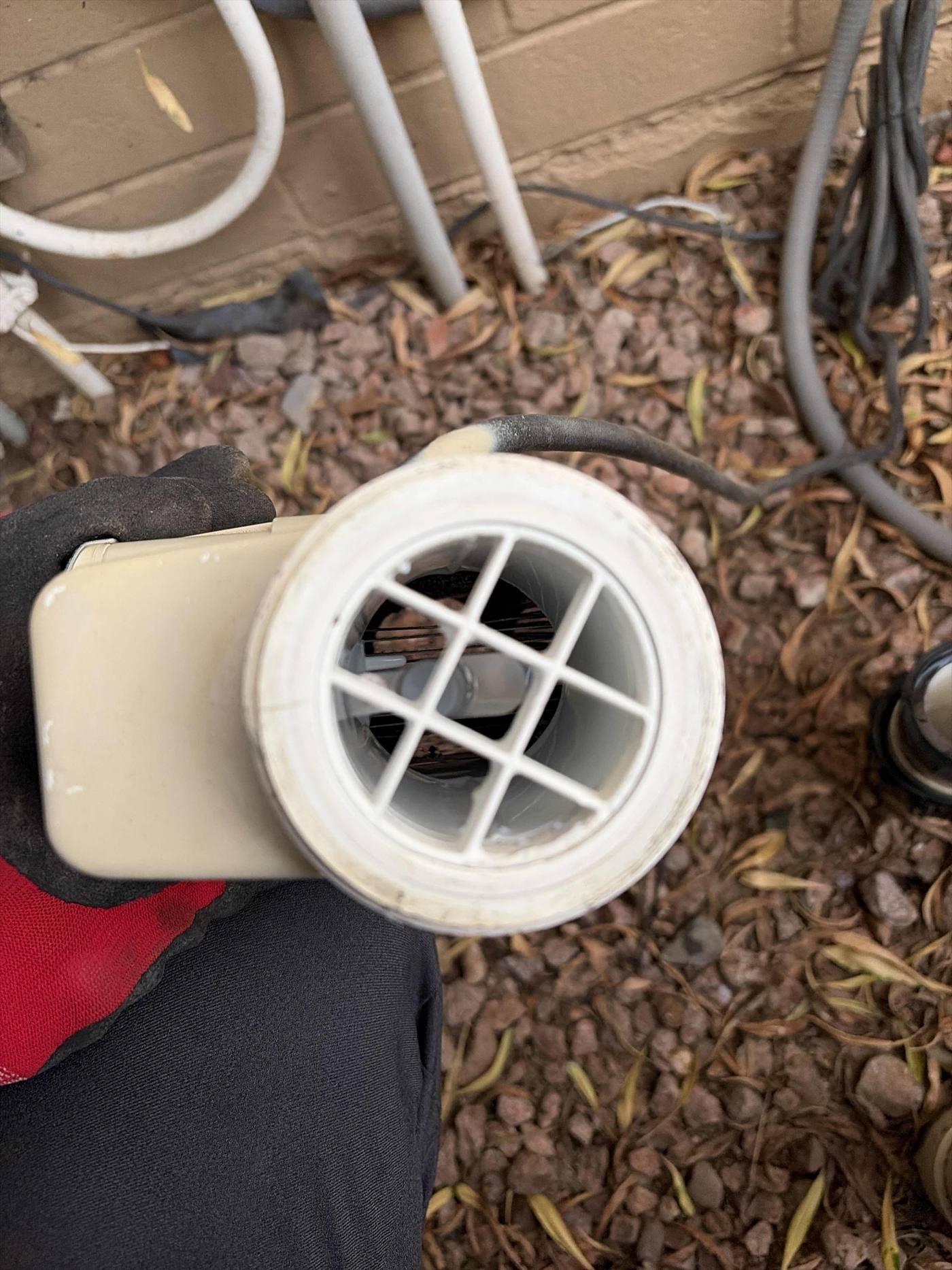
A salt cell's job is straightforward. As water passes over a set of metal plates, the cell uses electrolysis to turn dissolved salt into chlorine. When those plates and the housing stay clear, the system can sanitize the pool without a constant supply of liquid chlorine.
Arizona water makes that harder than it looks. Our tap water is already mineral-heavy, and desert heat evaporates water out of the pool, leaving calcium and other minerals behind. Those minerals do not disappear. They settle on tile, inside heaters, and on the salt cell itself. We wrote more about that process in How Arizona's Hard Water Damages Your Pool Equipment. The same buildup that leaves a white ring along the waterline can coat the inside of a cell.
Once scale builds up, water cannot move cleanly across the plates, chlorine output drops, and the cell has to work harder than it should. Left alone, that wear shortens the life of a part that is expensive to replace. This post is not a comparison of salt systems and traditional chlorine. It is about keeping the cell you already have doing its job.
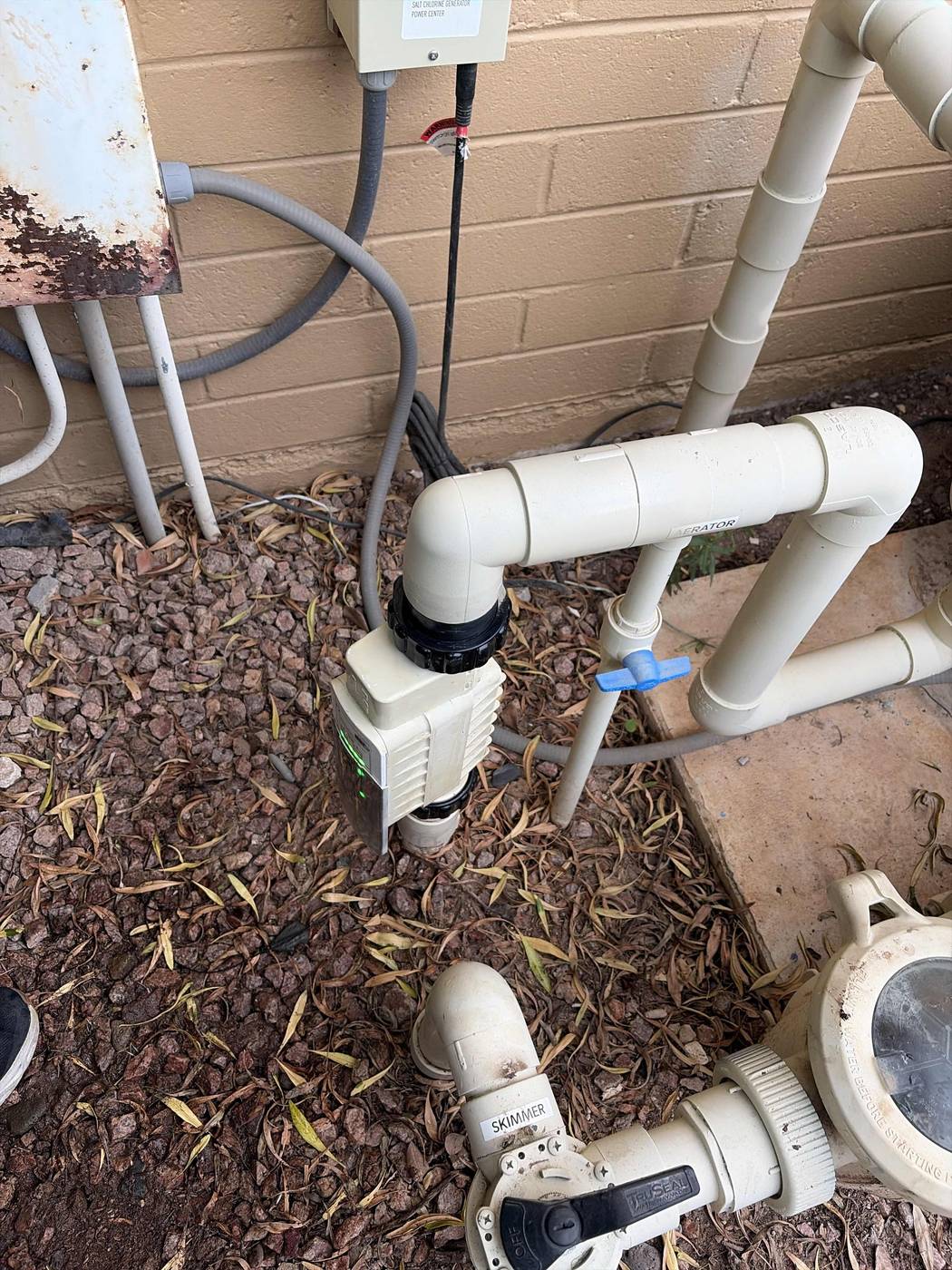
The equipment pad on this stop was a typical West Valley setup: a Pentair IntelliChlor power center on the block wall, PVC plumbing, and the salt cell sitting in the return line. We shut the system down, opened the unions, and lifted the cell out for a close look.
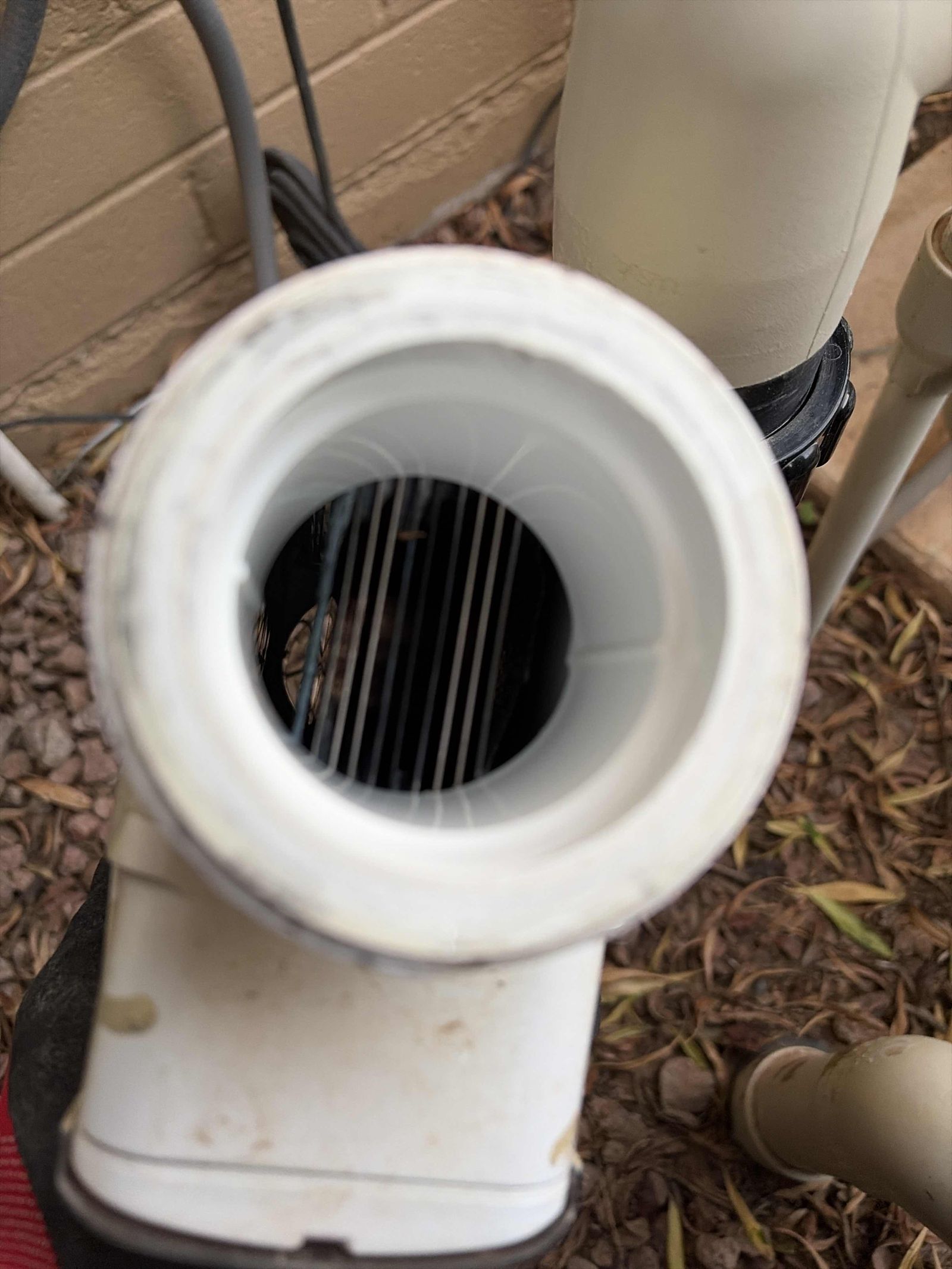
From the open end, the metal plates were still visible. This was not a cell that had been completely buried in scale. Even so, a distinct white mineral ring had already formed around the rim of the housing, and the opposite end — the flow-grid side in the first photo — showed the same chalky crust along the union. That is exactly what we look for on salt systems in Glendale and across the West Valley. Scale starts at the edges and works inward. Catching it at this stage is the point of a cleaning: get the minerals off before they insulate the plates and cut production.
After the inspection, we cleaned the scale from the housing and plates, checked the unions, and set the cell back in the line with the flow arrow pointing the right direction — down, on this install. Then we primed the pump and brought the system back up.
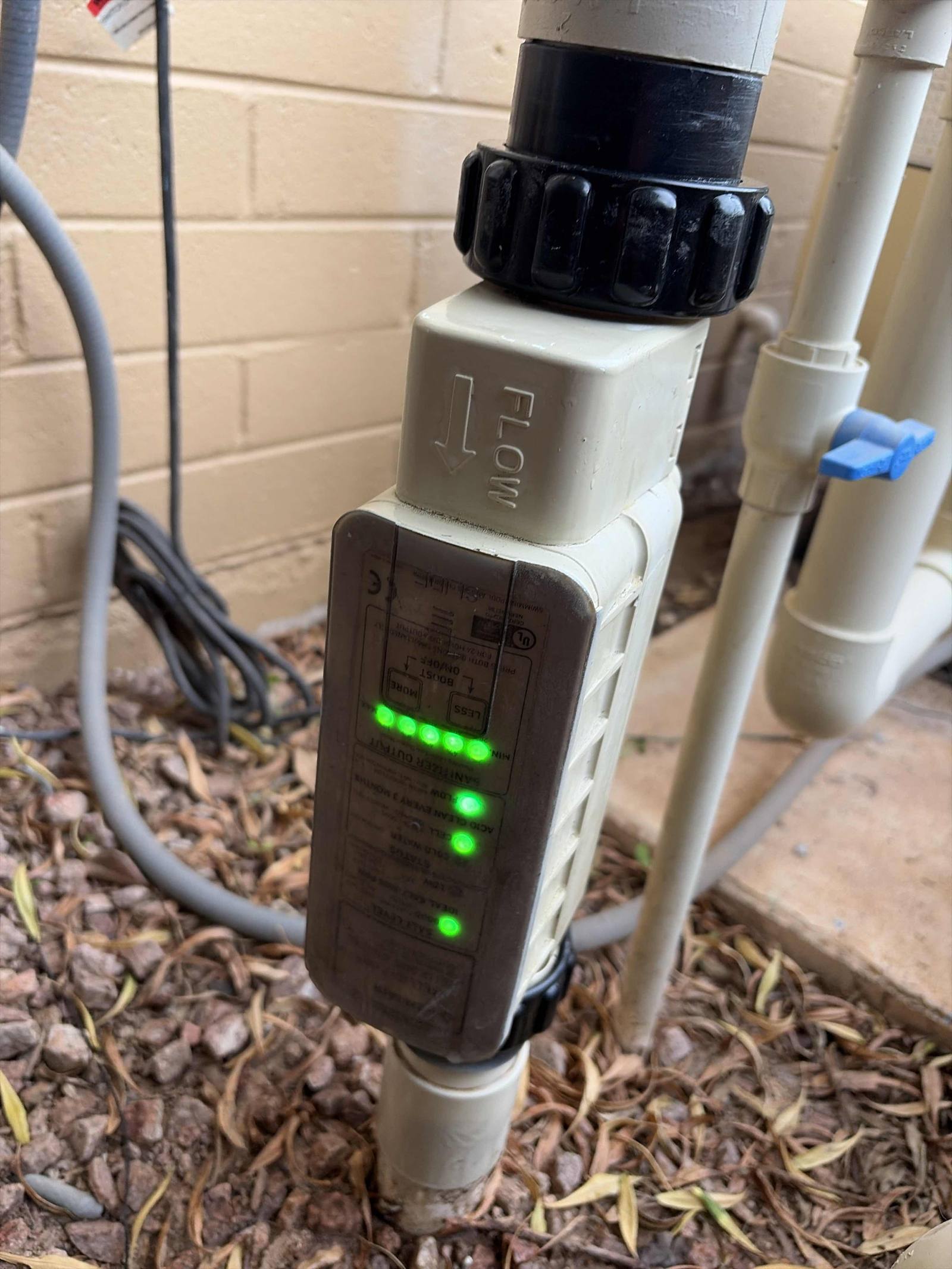
Once the water was moving, the cell's faceplate lit up green across the sanitizer output row and the status lights below it. That is the after picture that matters on a job like this: the cell is back in the plumbing, seated correctly, and the generator is reporting a healthy system.
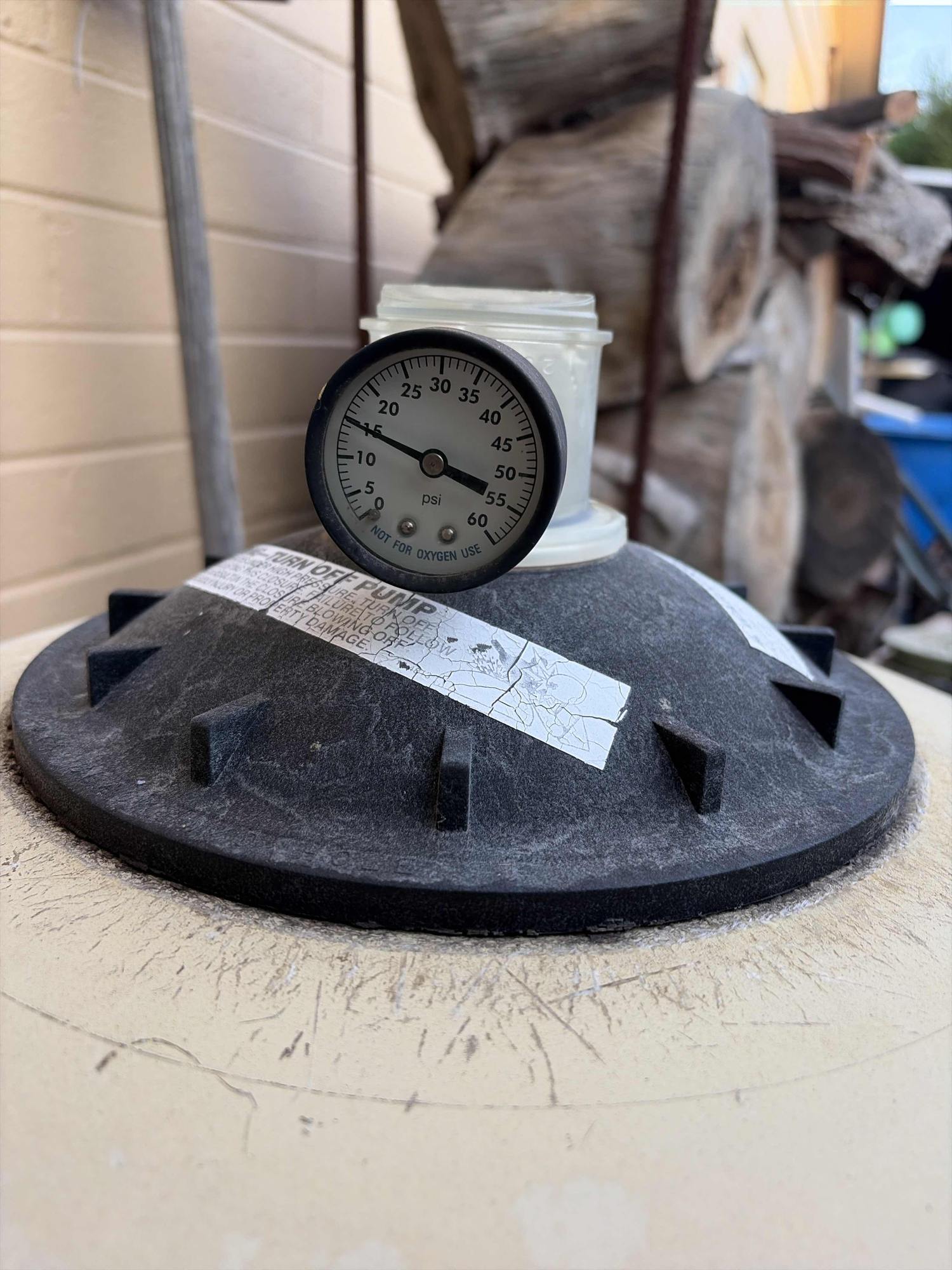
We also checked filter pressure before leaving. On this sand filter, the gauge was sitting just under 20 psi, a useful reading to have on file after any work that involves opening the plumbing.
This kind of inspection is also why consistent weekly pool cleaning matters, whether you are in Phoenix or Glendale. Baskets, filters, and salt cells all collect what the desert puts in the water. Catching scale early is a lot easier than replacing a worn-out cell. If you are in the area and need help with a salt system, our pool services in Glendale cover cleanings, equipment care, and repairs.
You do not have to wait for a complete failure to get a cell checked. A few everyday clues are usually enough:
If you see those signs, skip the screwdriver and the jug of household acid. The coating on those plates is easy to damage, and a ruined cell costs far more than a proper cleaning. That is a job we are happy to handle.
If your salt system is losing steam, or you just want a technician to pull the cell and take a look, contact For His Glory Pool Professionals. We are a family-owned Christian company serving Glendale, Peoria, North Phoenix, and the rest of the West Valley, and we treat every backyard we walk into with the same care we would want for our own.
Call us at (623) 252-1404 or send a note through our contact page. We will get your cell clean, your system flowing, and your water back to doing what it should.